Unpacking the Layers of Bioshock Infinite's Final Twist
2 June 2026
Let’s be honest—if you've finished Bioshock Infinite and your brain didn’t do a double backflip into a pool of confusion, did you even play it right? Seriously, this game messed with our heads in the best way possible. It's one of those rare storylines where you sit in stunned silence through the credits, wondering, “Wait, what just happened?!”
In this wonderfully weird little corner of the gaming universe, reality is like a carnival mirror—you see yourself, but not quite. It’s twisted, brilliant, and totally worth diving into. So let’s grab our sky-hooks and hammer apart the ending of Bioshock Infinite piece by piece. Warning: We’re going full spoiler mode here.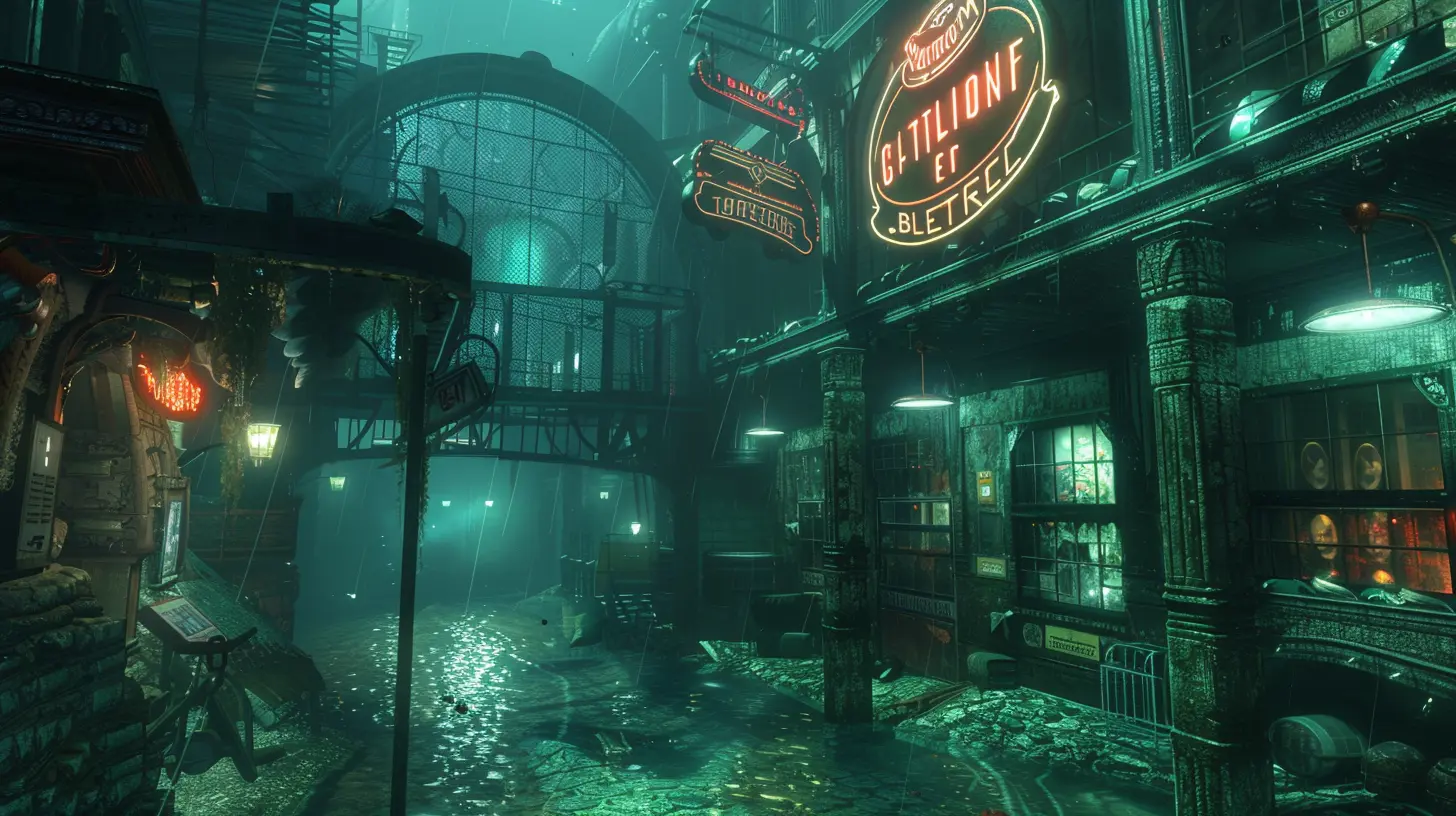
The Infinite Loop: Where It All Collapses
Okay, so let's start with the big twist: Booker DeWitt is Comstock. WHAT?!Yep. Mind blown, right?
At first, you’re cruising through the floating city of Columbia, chasing down a girl in a tower, dodging fireballs and fighting racist robot George Washingtons. Then—BAM—the game pulls out a plot twist so dense, it might as well have its own gravitational pull. The moment you realize Booker and Comstock are the same person from alternate universes, you start questioning your entire playthrough. Should you have seen it coming?
Well, kind of. The game drops breadcrumbs throughout. But let’s be real: those crumbs are covered in multiverse icing, so it’s easy to overlook them.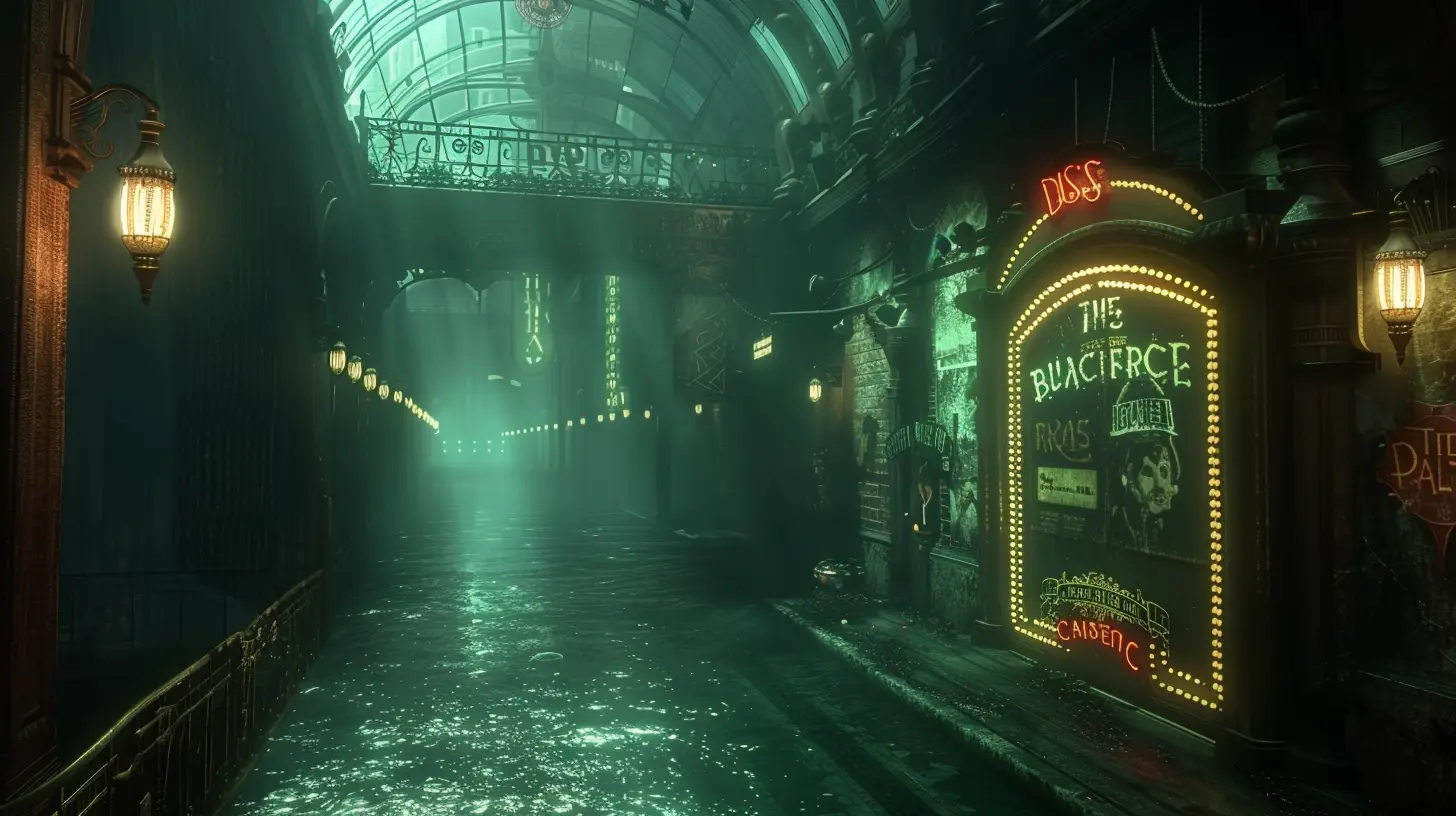
Baptism and the Split Timeline Theory
Here’s where it gets juicy. The game hinges on one crucial moment in Booker’s life—his baptism after the Battle of Wounded Knee.In one universe, Booker accepts the baptism and is born again as Zachary Hale Comstock, a holy-rolling nationalist who creates Columbia. In another universe, he refuses the baptism and continues living as Booker, wracked with guilt and debt. That’s the fork in this whole tangled tree of timelines.
It’s like a cosmic “Choose Your Own Adventure” book, but every choice creates a new universe, each with its own screwed-up version of events. And because quantum physics apparently moonlights as a game writer here, all those universes coexist. That’s where things get spectacularly confusing.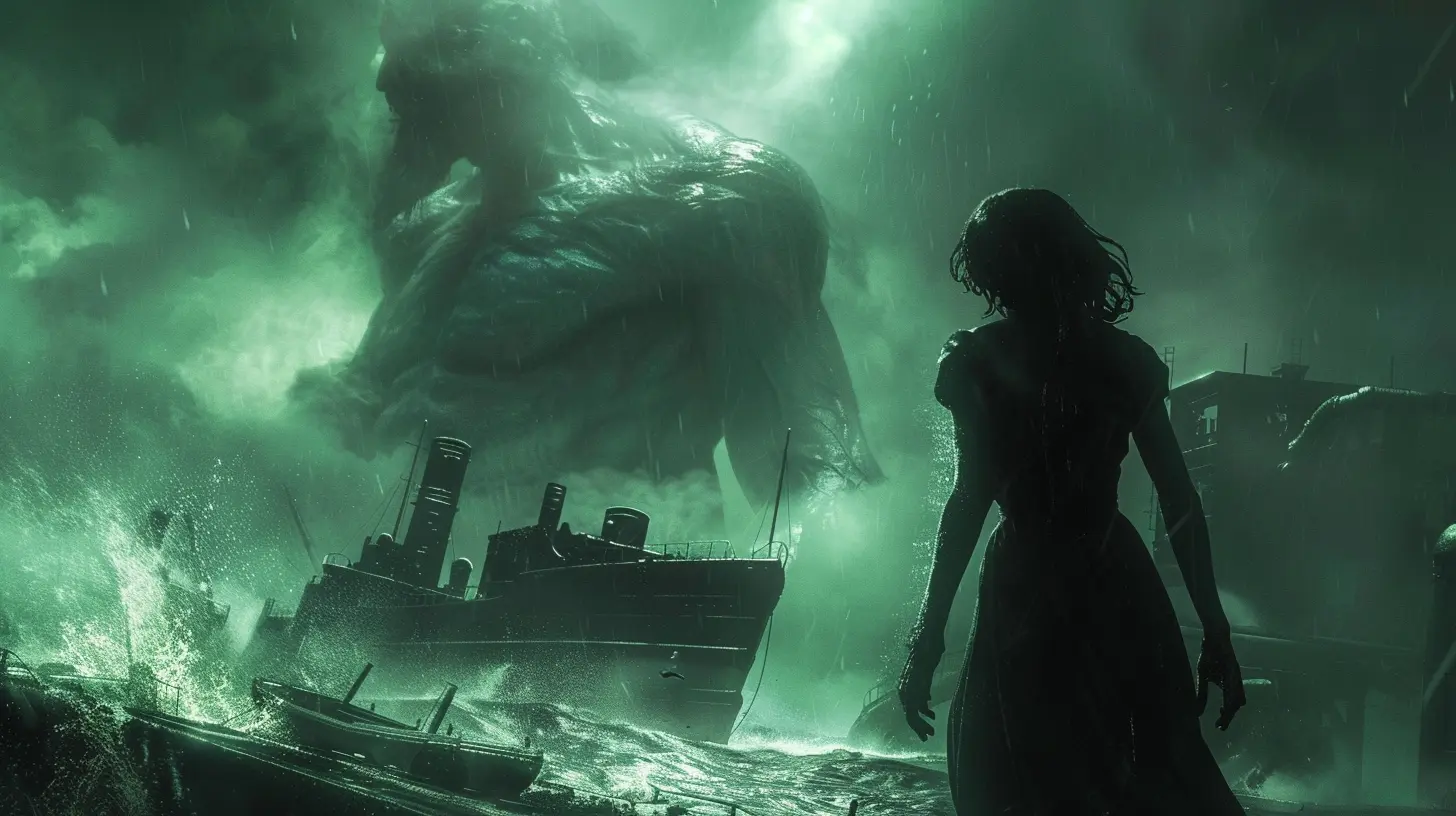
Elizabeth: The Key, The Constant, The Catalyst
Let’s talk about our girl Elizabeth. She’s not just a damsel in distress with an epic hair flip—she’s the freaking linchpin of the entire multiverse.Elizabeth can open “tears” in reality—rips that let her peek into or travel between universes. That ability? Courtesy of Comstock, who kidnapped her from an alternate universe to use her as his heir. Oh, and he literally ripped her from Anna DeWitt’s arms (Booker’s daughter), severing her pinky in the process. That’s why she can exist in multiple realities without being anchored to one. It’s also why spaghetti makes more logical sense than this plot.
Basically, she’s Schrödinger’s daughter—alive and taken, dead and lost, all at once.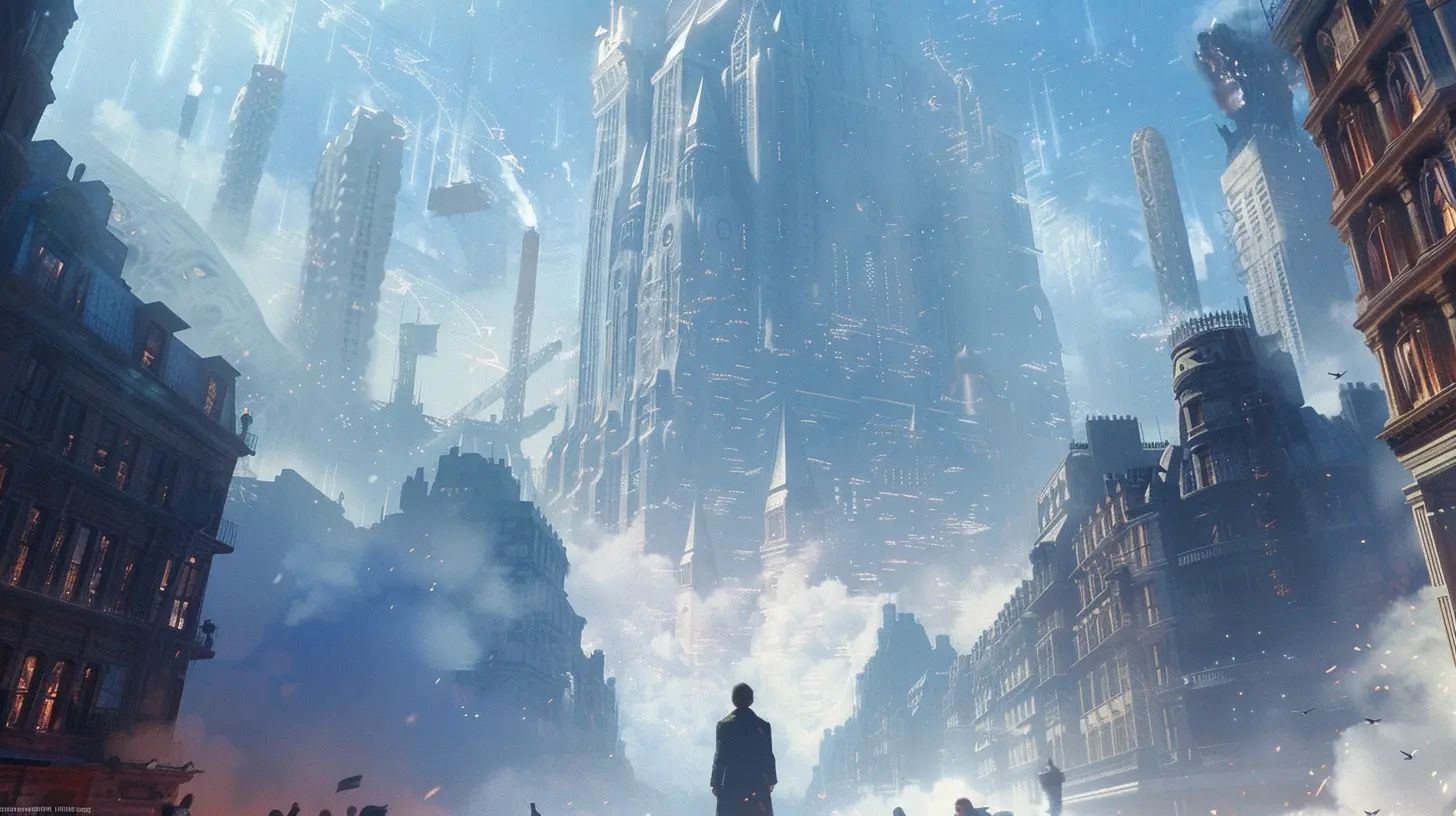
Lutece Twins: Or Are They?
Just when you think this story couldn't get more layered, in swoop the Lutece twins: Rosalind and Robert. But plot twist—they aren’t even twins. They’re the same person from alternate realities: one born male, one born female.These two are like the multiverse’s tour guides, gently nudging events to line up like cosmic dominoes. Halfway through the game, you realize they’ve been pulling the strings all along. They’re flipping coins, predicting Booker’s actions, and treating life like a science experiment with unlimited variables.
What’s wild is that they exist in a quantum state—their atoms scattered across timelines after a botched experiment. In a way, they’re ghosts who never died, continuously trying to fix the mess they helped create. So they're kind of like time-traveling, dimension-hopping Mr. and Mrs. Frizzle, but with way more existential dread.
The Cycle of Redemption and Endless Realities
The endgame twist shows us that every time Booker tries to “wipe away the debt,” he's drawn into a cycle. He always gets pulled into Columbia. He always tries to rescue Elizabeth. And, in one way or another, it always ends in tragedy.The genius of the final twist is that it doesn’t just end the story—it questions the nature of choice in video games entirely. If Booker’s path is written, are your choices as a player even real?
The answer the game gives? Kinda not. The illusion of choice is just that—an illusion. Which is wild, considering how much time you probably spent trying to pick the “right” path. Joke’s on us, huh?
Drowning Comstock Before He Exists
Now, let’s talk about that chilling final scene—Elizabeth leads Booker to the site of his baptism. He realizes the only way to end the cycle is to stop Comstock from ever being born. That means drowning himself—Booker DeWitt—in the damn baptismal waters. Heavy stuff.But here’s where the storytelling just flexes. As multiple versions of Elizabeth show up, you realize this Booker isn’t just dying—he’s being erased across all timelines. If there’s no baptism acceptance, there’s no Comstock, no Elizabeth’s kidnapping, and no Columbia.
It’s a poetic, brutal finale. Booker chooses to kill the part of himself that gave birth to evil. It’s like cutting off a Hydra’s head with the hope it doesn’t grow back. Spoiler: in quantum mechanics, it probably still does.
So… Is That a True Ending?
Now that’s the million-dollar question. Did it work? Is the cycle broken for good?The post-credits scene throws a little grenade at your brain because we see Booker back in his office, calling out for Anna. Cliffhanger much?
There are arguments on both sides. Some believe he stopped Comstock and saved Anna for good. Others think that scene is just another timeline branching from a different decision—like a cosmic “What if?” moment.
Remember: constants and variables. Even if Comstock is gone in that reality, infinite universes mean infinite Bookers and potentially infinite Comstocks. There’s no definitive win when you’re playing 4D chess with infinity.
Themes Wrapped in a Philosophy Blanket
At its core, Bioshock Infinite doesn’t just tell a story—it dissects one. It tears open the ideas of guilt, redemption, choice, and causality, rolls them up in a burrito, and slaps some quantum physics chili on top.It asks uncomfortable questions like:
- Can you ever truly escape your past?
- Is redemption possible, or just another illusion?
- Do our actions mean anything in a world of infinite possibilities?
It’s like if Nietzsche and Einstein got stuck in an elevator with a Playstation.
The Real Magic: A Game That Makes You Think
Let’s face it—most video games don’t inspire Reddit essays that rival college dissertations. But Bioshock Infinite? It’s got lore so deep, you need a scuba suit just to theorize. And it sticks with you, long after you’ve put the controller down.You start wondering about alternate versions of yourself. You walk past a church and think, “What if?” You hear someone flip a coin and have an irrational urge to follow them just in case they’re from another dimension. That’s the mark of a story done right.
Final Thoughts: Infinite Interpretations
Unpacking the layers of Bioshock Infinite’s final twist is like peeling an onion made by Stephen Hawking and Shakespeare. Every layer reveals more tears, but also more brilliance.Yes, the ending is confusing. Yes, it throws you into a philosophical whirlwind. But that’s the beauty of it. It dares to be complex, to challenge the player, and to mess with the rules of storytelling in a medium that often plays it safe.
If you haven’t played it—first of all, why are you still reading this? Go play! And if you have, maybe it’s time for another run. Because just like the universe of Bioshock Infinite, there’s always another playthrough. Always another lighthouse. Always another man.
all images in this post were generated using AI tools
Category:
Game Endings ExplainedAuthor:

Pascal Jennings
Discussion
rate this article
2 comments
Zyana Lawson
Bioshock Infinite's final twist brilliantly redefines choice and consequence, challenging our perceptions of reality. It forces players to confront the weight of history and the possibilities of infinite narratives... truly unforgettable.
July 13, 2026 at 2:23 PM
Arianth Edwards
I always wondered how Bioshock Infinite's ending changes the way we view the entire story. What were the creators hinting at throughout the game? The layers really make you think...
June 9, 2026 at 4:17 PM
Pascal Jennings
The ending recontextualizes everything, revealing that choice and consequence are intertwined throughout. The hints suggest that our perceptions shape reality, making us question the nature of freedom and fate. It's a profound commentary on identity and the multiverse, inviting deeper reflection on the player's journey.