Understanding the End of Returnal and Its Psychological Depth
31 July 2026
Returnal is one of those rare games that messes with your mind—in a good way. It’s not just about fast-paced gunfights or dodging bullets—it’s a psychological rollercoaster. If you've finished the game (and congrats if you have, because it's no walk in the park), you probably sat back during the credits and went, "What just happened?"
Well, you’re not alone.
Returnal’s ending is packed with symbolism, emotional layers, and mental twists that leave players scratching their heads. But that’s also what makes it such a masterpiece. In this article, let’s break down the ending of Returnal and dig into its psychological undertones. It’s time to make sense of Selene’s looping nightmare—and what it really means.
The Basics of Returnal
Before we go deep, let’s set the stage.In Returnal, players take on the role of Selene Vassos, a space explorer who crash-lands on a mysterious alien planet called Atropos. The twist? Every time she dies, she comes back to life and relives the same crash, over and over again.
Sounds like a classic time loop, right? Except this one’s steeped in trauma, guilt, and some serious mystery.
Atropos seems to be alive, constantly changing. Rooms shift, enemies evolve, and Selene starts encountering echoes of herself. As you go through the game, you realize this isn’t just a mission—a lot of it is happening inside her mind.
So... What Actually Happens at the End?
Let’s talk about Returnal’s ending—or rather, endings. There are two major ones, actually—the “normal” ending and the “secret” or “true” ending. Yep, Housemarque really wants us to dig.The Standard Ending (After Act 2)
Once you beat Ophion, the final boss in Act 2, Selene finally manages to leave Atropos—or so it seems. She returns to Earth, grows old, and eventually dies. However, after her death, her body ends up... back on Atropos. Cue the loop.So basically, you “escape” but really, you don’t. The cycle restarts, which feels like a punch to the gut. You can practically hear Selene’s exhausted sigh.
The True Ending (After Act 3)
To unlock the true ending, you need to collect six Sunface Fragments and return to the house one last time. Once you do that and beat Ophion again, boom—the game kicks off a final cutscene with a much deeper and darker reveal.In this version, Selene finds herself submerged deep underwater. She sees a car accident—a recurring visual throughout the game—and meets... a mysterious creature in a wheelchair, heavily hinted to be her mother, Theia.
It gets extra trippy because Selene herself seems to morph into the creature—or at least come face to face with part of herself. In other words, she’s not just stuck in space... she’s trapped within trauma.
It ends with her trapped in the cycle once more. There’s no neat bowtie here, folks. It's complex. Like, really complex.
The Psychological Layers Behind the Loop
Okay, so now that we’ve covered what happens—let’s tackle the real question: What does it all mean?Beneath the alien world, monsters, and sci-fi elements, Returnal is actually a portrait of a fractured mind.
1. The Loop as a Metaphor for PTSD
Selene’s time loop isn’t just science fiction—it’s symbolic. Many players and critics have pointed out that her constant resurrection could represent post-traumatic stress disorder (PTSD).Think about it. She's reliving the same traumatic event (the crash) over and over. No matter what she does, she can’t escape. That’s what PTSD often feels like—being trapped in a memory, emotionally and mentally, with no way out.
The repeating environments, the haunting audio logs from “other versions” of herself, and the sense of isolation—it all mirrors how trauma can distort reality.
2. The Car Crash and Motherhood
One of the most striking motifs in Returnal is the car crash. We see it in cutscenes, underwater sequences, and memory fragments. It strongly hints that Selene was involved in a car accident—possibly with her child.Some interpretations suggest that she may have accidentally caused the death of her daughter. That guilt is what drives her internal nightmare.
The mysterious house you revisit throughout the game? It’s filled with mundane items from Earth, suggesting it’s part of Selene’s memory. The astronaut figure? Possibly her child or a symbol of lost innocence. And that wheelchair-bound creature? Most theories peg her as Theia, Selene’s mother, mirroring complex generational trauma.
Yep, this rabbit hole runs deep.
3. Atropos as the Mind Palace
Atropos isn’t just a planet—it’s Selene’s subconscious.From shifting biomes to cryptic messages, the world constantly reflects her inner turmoil. Just like dreams often combine real-life memories with abstract feelings, Atropos seems built from Selene’s deepest fears and regrets.
The name "Atropos" even comes from Greek mythology—she was one of the three Fates, the one who cuts the thread of life. Fitting, isn’t it?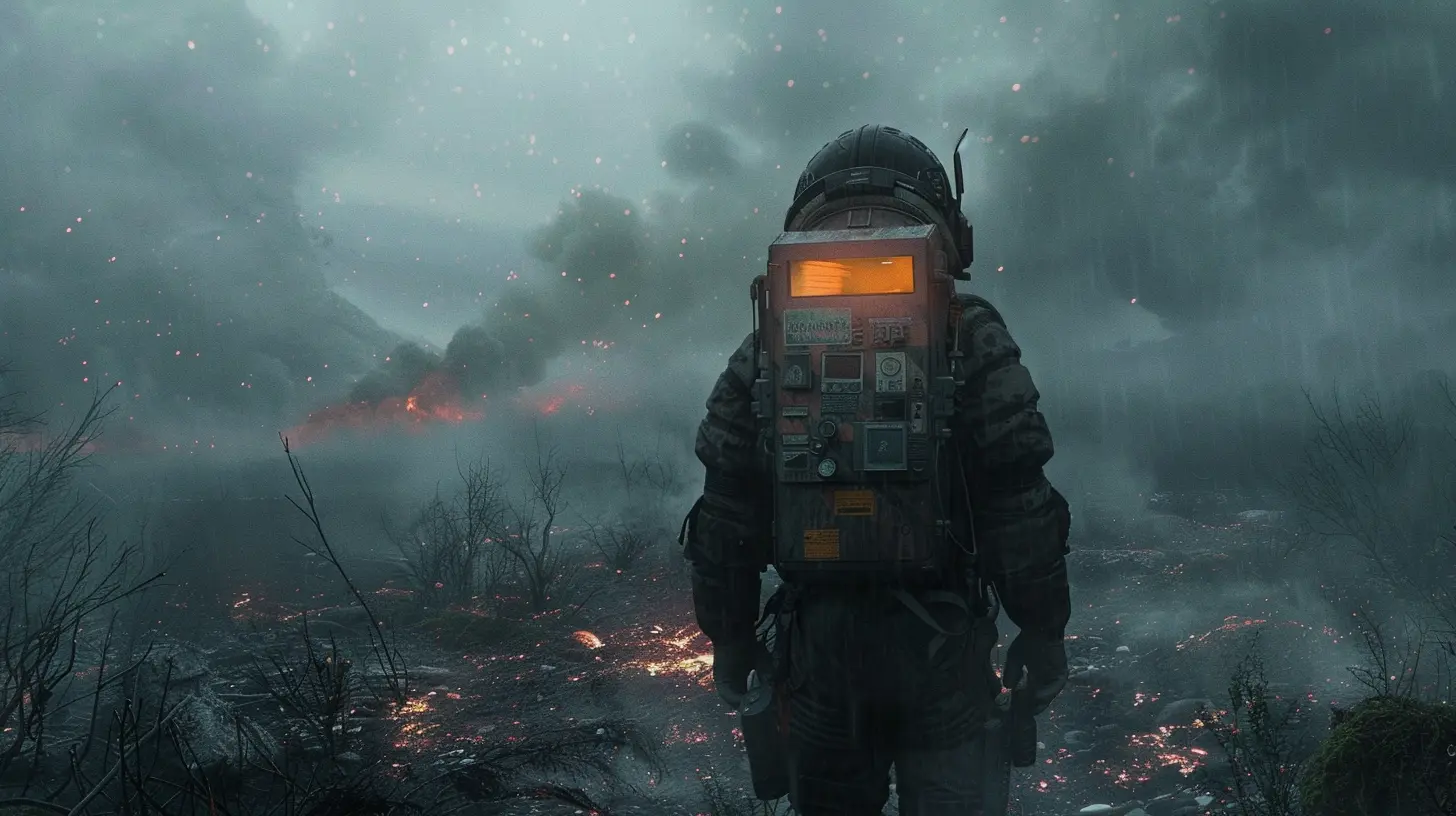
The Role of Guilt and Acceptance
There’s a heavy emotional weight behind everything Selene experiences. The bosses you fight? Some fans believe they represent emotional barriers—grief, denial, rage, and despair.And the game doesn’t reward you with a fairytale ending. Even in the true ending, Selene doesn’t get closure. She continues the loop. But there’s a subtle difference.
In accepting the truth—even if it remains abstract—she begins to reclaim parts of herself. Facing the monster in the wheelchair can be seen as facing the darkest part of her past.
This isn’t a rescue mission. It’s a journey through layered grief.
Why Returnal’s Ending Is So Polarizing
Let’s be real—not everyone loved the ambiguous ending. Some players were frustrated. “Why did I go through all this just to loop again?” they wondered.But here’s the thing—Returnal isn’t about “beating” something.
It's about confronting it.
And that’s what separates it from other games. Most titles ask you to kill the final boss and roll credits. Returnal asks you to think about what your mind can (and can’t) escape.
Psychological horror thrives on leaving questions unanswered, and Returnal pulls this off brilliantly. The ambiguity invites interpretation, rather than handing you a cheat sheet.
Returnal and the Rise of Psychological Gaming
Returnal isn't alone in this space. Games like "Hellblade: Senua’s Sacrifice," "Silent Hill 2," and even "Inside" have leaned heavily into psychological themes. But Returnal does it while blending roguelike mechanics and high-octane action.That’s what makes it so groundbreaking.
You’re fighting aliens—but really, you’re fighting guilt, pain, and memory. It’s a sci-fi therapy session wrapped in bullet hell.
Final Thoughts: What Returnal Teaches Us About the Mind
Returnal isn't just Selene’s story—it's kind of all of ours, in a way.We’ve all looped through certain emotions. Ever replayed a regret or embarrassing moment in your mind, over and over? That’s what Returnal is about, just on a grand, cosmic scale.
The game doesn’t offer easy answers. But what it does offer is a brutally honest look at how our minds try to process the unthinkable.
Through its cryptic storytelling, haunting environments, and deeply symbolic structure, Returnal asks us to examine the loops we carry—in grief, in trauma, and even in hope.
So the next time you wake up feeling like you’re starting all over again… maybe remember Selene. And know that moving forward isn't always a straight line. Sometimes, it's a spiral.
FAQs
Q: Is Selene actually dead the whole time in Returnal?
That’s one interpretation! Some theories say the entire game is a mental projection from a dying mind. Others believe she’s very much alive but psychologically trapped. The truth? It’s left up to you.Q: What’s the significance of the astronaut figure?
The astronaut could symbolize her child or even herself as a child. It follows her around like a past she can’t escape. Think of it as a ghost of memory.Q: Can you really escape the loop in Returnal?
In gameplay, no. Even after the “true” ending, you’re still in the loop. But thematically, facing the truth might be a form of escape—just not the kind you’d expect.all images in this post were generated using AI tools
Category:
Game Endings ExplainedAuthor:

Pascal Jennings