How Game Engines Influence Visual Quality
8 June 2026
When you boot up a game and get blown away by the stunning environments, lifelike characters, or cinematic effects, you’ve got one major element to thank — the game engine. But what exactly is a game engine, and how does it make your favorite games look so dang good? Let’s dive deep into this world and see how game engines influence visual quality and what’s really going on behind the scenes.
What Is a Game Engine, Anyway?
Alright, before we get too ahead of ourselves — let’s clear up what a game engine actually is.Think of a game engine as the backbone of a video game. It’s the software framework developers use to build and develop games. It's got all the essential tools and features like rendering engines, physics engines, audio systems, scripting capabilities, and more. Basically, it handles all the heavy lifting so developers can focus on designing gameplay instead of coding every little detail from scratch.
You can compare it to baking — a game engine is like the oven, mixer, and baking trays all rolled into one. It gives devs the ability to “cook up” amazing games without reinventing the wheel every time.
Now, when it comes to visual quality, the engine plays a massive role — and I mean massive.
How Game Engines Shape Visual Quality
Let’s get into the nitty-gritty. How do game engines actually affect what you see on your screen? There are several ways they do this, and trust me — each one matters more than you might think.1. Rendering Capabilities
First and foremost — rendering. This is how a game engine takes the 3D models, lighting, textures, and effects and turns them into the visual scenes you see on your screen.Ever noticed how some games look super realistic, while others have a cartoony or stylized look? That’s the rendering engine doing its thing.
- Real-Time Rendering: Engines like Unreal Engine are known for jaw-dropping real-time rendering. That’s what lets developers create cinematic visual quality that doesn’t take hours to load.
- Ray Tracing: This advanced lighting technique is now being baked directly into engines like Unity and Unreal. It simulates how light bounces around in the real world, making reflections and shadows look insanely realistic.
The better the rendering engine, the more visually impressive the game can be — simple as that.
2. Lighting & Shadows
Lighting in games isn’t just about visibility — it sets the mood, creates atmosphere, and makes the world feel alive.Different engines offer different systems for lighting:
- Dynamic Lighting: Allows objects to cast and receive shadows in real time. Think of a sunset casting long shadows behind trees — dynamic lighting makes that happen as you move around the game world.
- Global Illumination: Makes light bounce off surfaces, coloring nearby areas. It’s subtle but adds a ton of depth.
- Volumetric Lighting: That foggy light-beam effect when sunlight pours through a cracked window? Yep, volumetric lighting.
The more advanced the lighting system, the better the visual immersion.
3. Texture and Material Systems
Textures are the detailed images wrapped around 3D models. Materials define how those textures react to light. Together, they can make surfaces look like real wood, rough stone, shiny metal, or mushy mud.Game engines influence this big time.
- Physically-Based Rendering (PBR): Most modern engines use PBR, which mimics how light interacts with surfaces in real life. That’s why metal looks metallic and cloth looks soft — it’s not magic, it’s physics!
- Shader Support: Shaders are mini-programs that control how things look. Engines with strong shader capabilities allow for more visual experimentation and style.
So when you admire the intricate weave of a wizard’s robe or the slimy texture of a swamp trail — you’ve got the engine's material system to thank.
4. Animation Systems
Visual quality isn’t just about how things look — it’s about how they move.Engines with robust animation systems can make characters move fluidly, facial expressions look real, and even tiny background elements feel alive.
- Inverse Kinematics (IK): Ensures character limbs move naturally (no broken-jointed freak shows here).
- Facial Animation Support: Helps bring characters to life emotionally.
- Motion Capture Integration: Allows real-life actor movements to be translated into the game — yep, that’s how we get those ultra-realistic character animations.
An engine that supports these features can totally boost the believability factor.
5. Particle & Environmental Effects
Smoke, fire, sparks, fog, rain, magic spells — these tiny flourishes contribute massively to the “wow” factor. And guess what? The quality of a game engine determines how effectively those effects play out.- Particle Systems: These let developers simulate thousands of tiny elements that move and behave realistically — like snowflakes falling in a blizzard or dust from a crumbling wall.
- Weather & Environment Simulations: Some engines can simulate wind, rain, and even entire ecosystems, adding an extra layer of immersion.
Better engines = more mind-blowing particles and natural effects.
6. Optimization & Performance
Visual quality is great, but what happens if it tanks your frame rate?A solid game engine doesn’t just make things look good — it ensures they run smoothly.
- Level of Detail (LOD): Automatically reduces detail on objects further away to save performance without brain-melting the GPU.
- Occlusion Culling: Stops rendering objects you can’t even see (like stuff behind walls).
- Texture Streaming: Loads in high-res textures only when they’re needed.
A well-optimized engine lets developers push visual boundaries without making your console sound like a jet engine.
Popular Game Engines and Their Visual Contributions
Let’s take a look at some heavy-hitters in the world of game engines and how they influence the look and feel of games.Unreal Engine
This one’s the king of eye-candy. Unreal Engine (especially UE5) is known for its photorealistic visual fidelity. With features like:- Nanite (virtualized geometry)
- Lumen (global illumination and reflections)
- MetaHuman (ultra-realistic human models)
…it’s no wonder it powers many AAA titles and next-gen blockbusters.
Games like The Matrix Awakens, Fortnite, and Hellblade II showcase just how good it can look.
Unity
Unity is versatile and highly customizable. While it may not out-of-the-box match Unreal’s visuals, in the hands of a skilled dev, it can produce jaw-dropping results.It’s particularly strong in:
- Indie development
- Stylized visuals
- Cross-platform support
Take games like Ori and the Will of the Wisps or Hollow Knight — they’re stunning, and Unity powers them beautifully.
CryEngine
Known for pushing hardware limits, CryEngine delivers ultra-detailed visuals and massive open-world landscapes. It’s behind visually intense games like Crysis — which, for a long time, was the gold standard for graphics.Frostbite
EA’s in-house engine, Frostbite powers visually rich games like the Battlefield series and Star Wars Battlefront II. It’s known for large-scale destruction, realistic animations, and incredible lighting.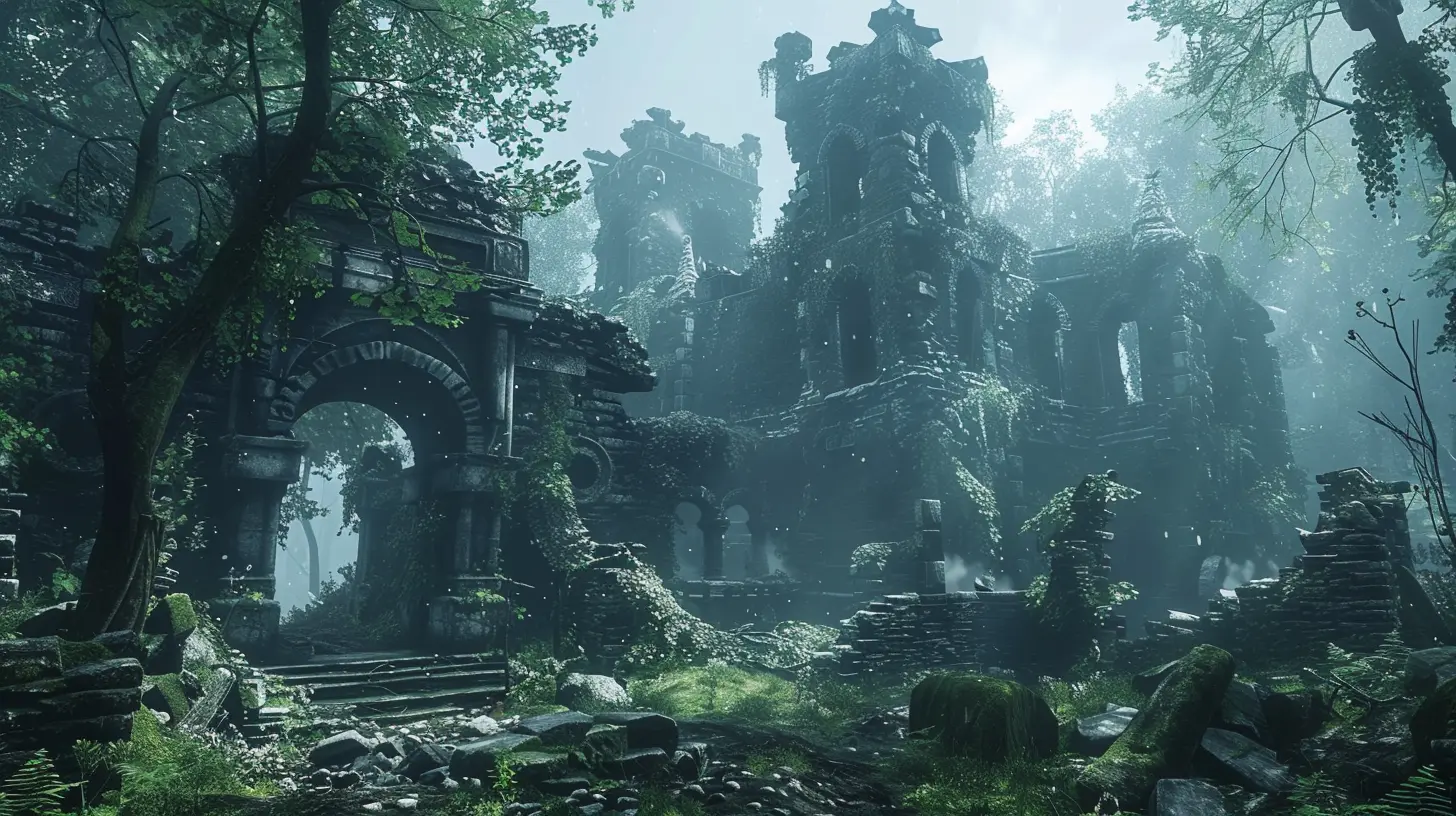
Why Visual Quality Isn’t Everything (But It Sure Helps)
Okay, let’s be real. A pretty game won’t save boring gameplay. Graphics can only take you so far — we’ve all played gorgeous-looking games that were snoozefests. But great visuals paired with tight gameplay? Pure magic.Game engines help bridge that gap, giving artists and developers the tools to create worlds that are not just fun to play but mesmerizing to experience.
The Future of Visuals in Game Engines
Game engines are evolving fast — like, scary fast. With AI-assisted art creation, procedural world-building, and machine learning entering the chat, expect even more immersive and dynamic visuals in the future.Imagine this:
- Games that adapt their lighting based on your playstyle
- Objects that age realistically over time
- Weather systems that follow real-world data
All of this is becoming possible thanks to rapid development in game engine tech. So yeah, exciting times ahead.
Final Thoughts
So, the next time you're walking through a hyper-realistic cityscape, or watching the sunset reflect off a lake in-game, remember — it's not just the artists or designers making it happen. It's the engine under the hood, doing some insane behind-the-scenes work.Game engines are the MVPs when it comes to visual quality. Whether it's through rendering, lighting, textures, animation, or effects, they set the stage (literally) for how jaw-dropping a game can look. Choosing the right engine isn’t just a technical decision — it’s a creative one that shapes the entire visual identity of the game.
So yep, game engines aren't just tools. They're the soul of a game’s visual magic.
all images in this post were generated using AI tools
Category:
Game GraphicsAuthor:

Pascal Jennings
Discussion
rate this article
1 comments
Makayla Baxter
Game engines shape visual fidelity through rendering techniques and optimizations, impacting everything from lighting to texture detail and overall immersion.
June 11, 2026 at 4:35 PM
Pascal Jennings
Absolutely, the choice of rendering techniques and optimizations in game engines plays a crucial role in enhancing visual quality and immersion. It's fascinating how these elements come together to create stunning experiences.