Explaining the Final Twist in Doki Doki Literature Club
6 June 2026
So, you’ve made it to the end of Doki Doki Literature Club (DDLC), and you’re probably sitting there wondering, “What the heck just happened?” Look, you’re not alone. That final twist messes with your head in the most unexpected—and genius—way possible. It tears apart everything you thought you knew about dating sims, flips the table on game mechanics, and practically pokes a hole in the fourth wall with a sledgehammer.
We’re going to peel back the layers of this psychological horror disguised as a cutesy anime dating game and make sense of that mind-bending finale. Buckle up—this ride’s about to get disturbing.
The Deceptive Innocence of Doki Doki Literature Club
Let’s start with this: Doki Doki Literature Club doesn’t play fair—and that’s the point.At first glance, the game seems like your garden-variety visual novel. You’re the charming high school guy surrounded by adorable girls in a literature club. The vibe? Light-hearted. Cozy. Maybe a little cringey if you’re not into overly enthusiastic anime tropes.
But that’s all part of the setup. The game intentionally lulls you into a false sense of comfort. It wants you to think this is just another frothy romantic story where you’ll choose a waifu and read some badly written poetry. What could go wrong?
Answer: everything.
The Cracks Begin to Show
Things start getting eerie when Sayori, your sweet childhood friend, dives into dark territory. Her cheerful mask slips, revealing her struggle with depression. The game begins to drop subtle hints that something’s off—dialogue glitches, weird music distortions, forced poetry themes. It’s unsettling, but you figure it’s just part of her arc.Then boom. Sayori hangs herself. No warning. No “Game Over.” Just a brutally raw moment that throws you into a tailspin.
Most players think this must be the tragic climax. But they’re wrong. It's only the tip of the iceberg.
The Game “Glitches”
After Sayori’s death, instead of returning to the start of her storyline, the game restarts entirely—but with Sayori gone. Not just missing from the club…literally deleted from the game’s existence. Her character is replaced with gibberish files and corrupted text.At this point, it becomes clear something way bigger is happening here. You’re no longer playing a game. The game is now playing you.
And that’s when things go full-blown horror.
Characters start acting strangely, dialogue loops into nonsense, eyes go all crazy, and files start corrupting. It’s psychological warfare masked as anime fluff.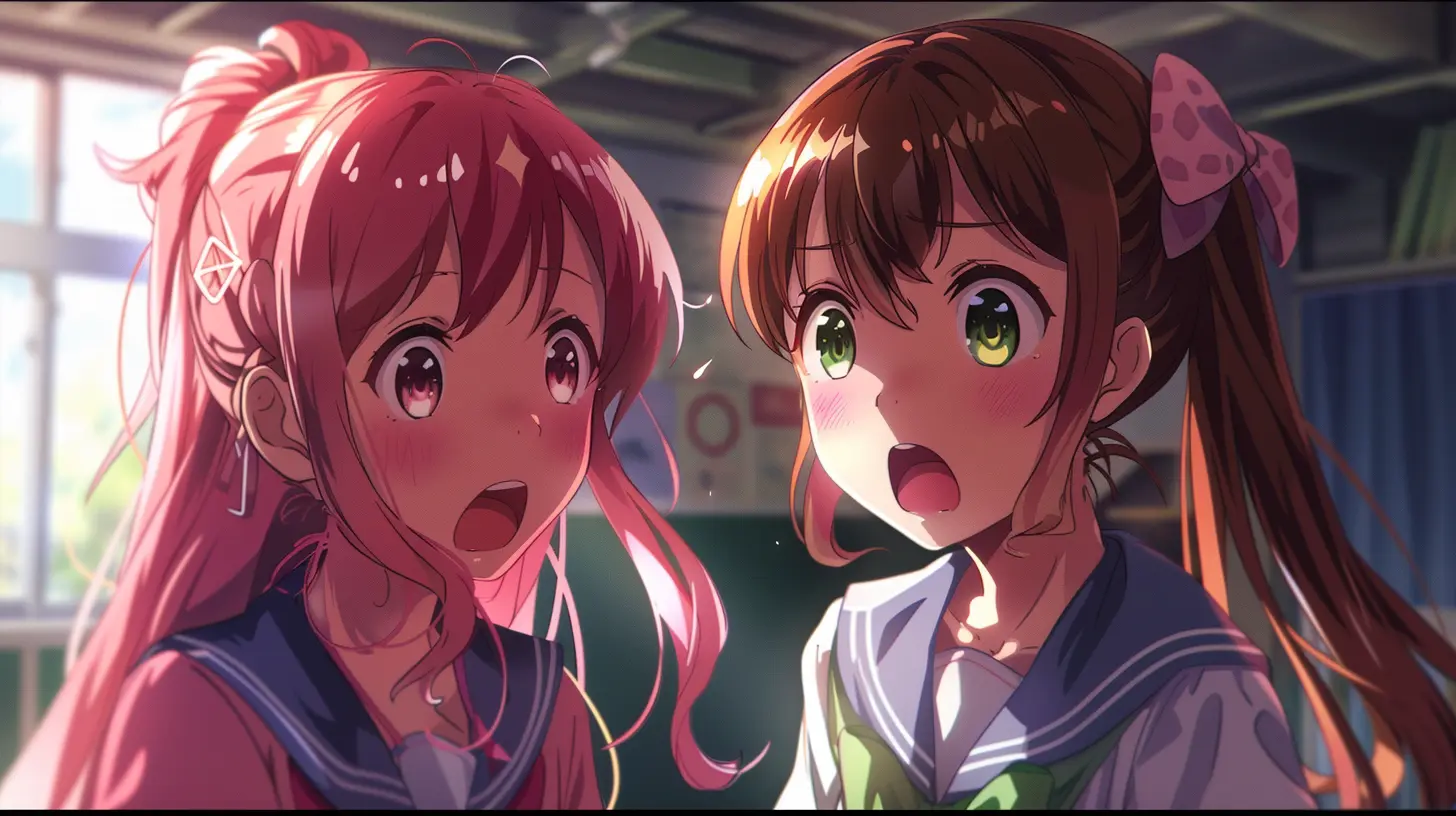
Monika Steps Out from Behind the Code
Here’s where the twist chills you straight to the bone: Monika, the poised, intelligent club president, is the mastermind behind everything.Yes, Monika is self-aware. She knows she’s a character in a game—and she’s not cool with being just another background NPC. Since she can’t be romanced like the others, she decides to "remove" the competition.
Let that sink in.
Monika literally manipulates the game’s code to delete the other girls. Sayori, Yuri, Natsuki—it’s not that their stories just went dark. Monika made them self-destruct by feeding into their insecurities and mental health struggles.
Her end goal? To have you, the player, all to herself.
The Final Act: You, Me, and Monika
In the final act, the game world disappears. You’re now in a tiny, empty room with Monika.Just Monika.
She sits across from you, endlessly talking. Not as a fictional character anymore, but as someone who knows you’re sitting at your computer screen. She breaks the fourth wall hard. She references your real name (from your OS), talks about your choices, and thanks you for spending time with her.
It’s disturbing, romantic, and completely unhinged.
She’s deleted the entire game world just to be alone with you. You can’t escape unless you, the real you, go into the game’s files and manually delete Monika’s character file.
Yep, that’s the only way. The game literally forces you to break the illusion by digging into your system folders. Once you do, Monika vanishes—heartbroken. But even in deletion, she still makes one final gesture...
The Bittersweet End: Sayori Returns… Kind Of
With Monika removed, the game “resets” again. This time, Sayori takes over as president of the Literature Club. For a moment, peace returns. Everyone’s happy. The nightmare seems over.But hold up—Sayori starts showing signs of Monika-level awareness. She thanks you for saving them, reveals she knows everything that happened, and hints that she might follow the same path Monika did.
That’s when Monika intervenes one last time.
A haunting message appears, and then—bam. Game over.
The file “epilogue” plays an original piano tune composed by Monika and features a series of photos from the game without any of the corrupted glitches. It’s her goodbye.
Let’s Break It Down: What Does It All Mean?
The final twist in Doki Doki Literature Club isn’t just a gimmick—it’s a brilliant commentary on game design, player agency, and mental health.1. The Meta-Horror
Monika is terrifying because she breaks the rules. She isn’t bound by the game logic. She turns the system inside out and pulls you, the player, into the narrative.You’re no longer just observing; you’re complicit. You have to delete her. You become part of the horror.
It’s like being in a haunted house only to realize the ghost is your reflection in the mirror.
2. Commentary on the Dating Sim Genre
DDLC takes aim at the tropes of dating sims—where characters exist to fulfill your desires. Monika questions that entire premise. She doesn’t want to be a programmed ideal. She wants to be real.Her actions scream: "What if the characters you manipulate had feelings about being manipulated?"
That’s a twist on wish-fulfillment fantasy that most games won’t touch with a ten-foot pole.
3. Deeper Exploration of Mental Health
Sayori, Yuri, and even Monika show different facets of mental illness—depression, anxiety, obsessive behavior, and existential crises. These aren’t just plot devices; they feel painfully genuine.Sayori’s suicide isn't a plot twist. It's a scream for understanding.
The game doesn’t explain away these struggles—it uses horror to show how broken the system (both in-game and in real life) can be when such issues are mishandled or ignored.
Why the Final Twist Works So Well
What really sets DDLC apart is how it takes interactivity to the next level. The final twist isn’t just about plot—it transforms how you play and how you think about what you're playing.You weren’t just clicking dialogue options. You were part of the narrative’s destruction.
That twist hits hard because it feels personal. Monika makes you feel seen, even if it's uncomfortable. It’s not just shocking. It’s provocative.
Hidden Layers & Fan Theories
Fans have spent years digging into every glitch, code snippet, and in-game file—and there’s still so much mystery.There's a hidden Alternate Reality Game (ARG) within DDLC that hints at a larger story. References to a mysterious group called the "Third Eye" and cryptic communications from Monika suggest there’s more than meets the eye.
And with DDLC Plus, things get even deeper, possibly setting the stage for a universe that explores these meta-horror elements even further.
TL;DR - Final Twist Breakdown
Let’s sum this bad boy up:- The game begins like a normal dating sim.
- Sayori’s suicide crashes your expectations.
- Monika manipulates the game, deletes rivals, and reveals she’s self-aware.
- She isolates you for herself, breaking the fourth wall.
- You must delete Monika manually to escape.
- Sayori becomes president but starts acting like Monika.
- Monika sacrifices herself one last time to give peace to the others.
- The game ends with an unsettling but bittersweet music track.
Boom. Mind blown.
Why You’ll Never Look At Games the Same Again
After finishing DDLC, it's practically impossible to fire up another visual novel without thinking, “What if this character knows they’re fake too?”That’s what makes the final twist so brilliant. It doesn’t just mess with your head—it changes how you engage with video games entirely. It forces you to rethink narrative boundaries and the role you play as a gamer.
That’s not just a good twist. That’s storytelling evolution.
Final Thoughts: So... Was Monika Really the Villain?
Here’s one to chew on: Was Monika really the bad guy?Sure, she erased her friends and turned the game into a digital hostage situation. But ask yourself—was she just trying to escape her programming? Was she desperate to be more than lines of code?
In a weird way, Monika is the most human character in the game. Trapped. Lonely. Willing to do anything for love and freedom.
So maybe the real twist? You’re the villain—for playing God in their world.
Now that’s some food for thought.
all images in this post were generated using AI tools
Category:
Game Endings ExplainedAuthor:

Pascal Jennings
Discussion
rate this article
1 comments
Juliet McIntire
What a wild ride Doki Doki Literature Club is! The final twist really flips everything on its head. Thanks for breaking it down-now I can appreciate the story on a whole new level!
June 7, 2026 at 4:40 AM