Why the Ending of Firewatch Still Resonates
21 May 2026
If you’ve played Firewatch, chances are its ending left you sitting in silence, staring at your screen long after the credits rolled. Not because of explosive plot twists or jaw-dropping reveals, but because of something far subtler. It lingers. It breathes. It hurts a little. And maybe that’s why it resonates so deeply.
Firewatch, developed by Campo Santo, is a narrative-driven adventure game set in the Wyoming wilderness. You play as Henry, a man trying to escape a life full of pain, guilt, and things left unsaid. You spend your summer alone in a lookout tower, chatting with your supervisor Delilah over a walkie-talkie. The game teases mystery, flirts with suspense, and ultimately delivers a gut-punch disguised as closure.
Let’s dive into why the ending of Firewatch is still turning heads and stirring hearts years after its release.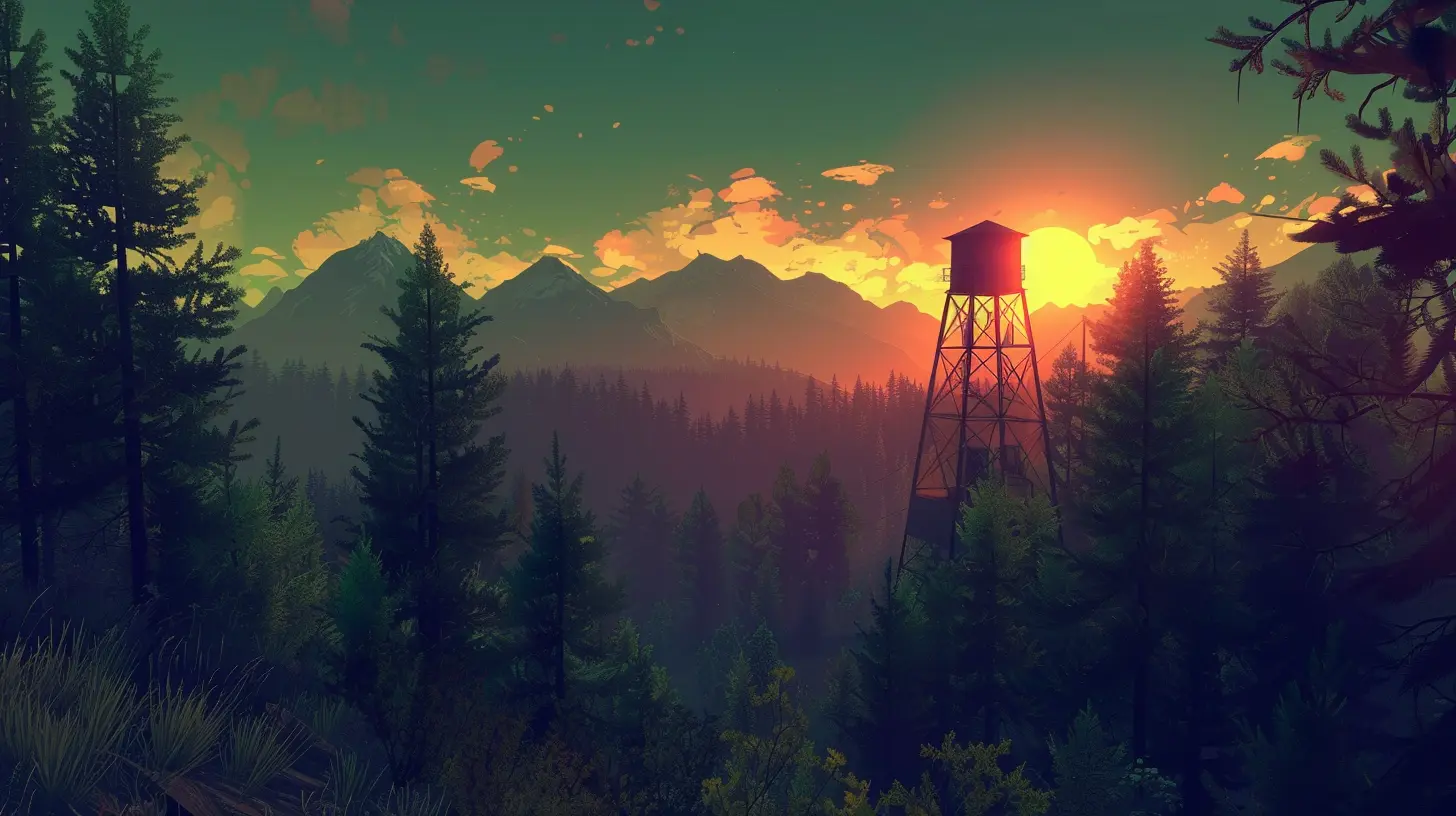
It’s Not What You Expect — And That’s the Point
Think about most story-driven games. They tend to have clear arcs: rising tension, big climax, satisfying (or shocking) resolution. You expect closure. You expect answers. Firewatch leads you down what feels like a trail toward a classic mystery — strange happenings, a possible government conspiracy, missing people — only to reveal that the true story was something far more grounded, raw, and, honestly, mundane.And here’s the kicker: that’s what makes it powerful.
It plays with your expectations. It throws breadcrumbs that feel like they’re leading to a grand conspiracy only to walk you into a quiet, personal tragedy. It’s not a story about solving a murder; it’s a story about loneliness, connection, and the fragile things we cling to when life falls apart.
The Real Mystery Is Human Emotion
At first glance, you’re unraveling a “plot”: why is there a hidden surveillance station in the woods? Who’s watching you? What happened to Brian Goodwin?But as the fog clears, those questions blur into the background, and the focus shifts to something far more intimate: Henry himself.
He’s a man running away—from a wife suffering early-onset dementia, from responsibilities, from pain. And Delilah? She’s not much different. They’re both emotionally shipwrecked, looking for something real, something that makes sense. Their conversations become the heart of the game, not the mystery.
By the time the game ends, you realize the true mystery wasn’t out in the forest. It was inside these people all along.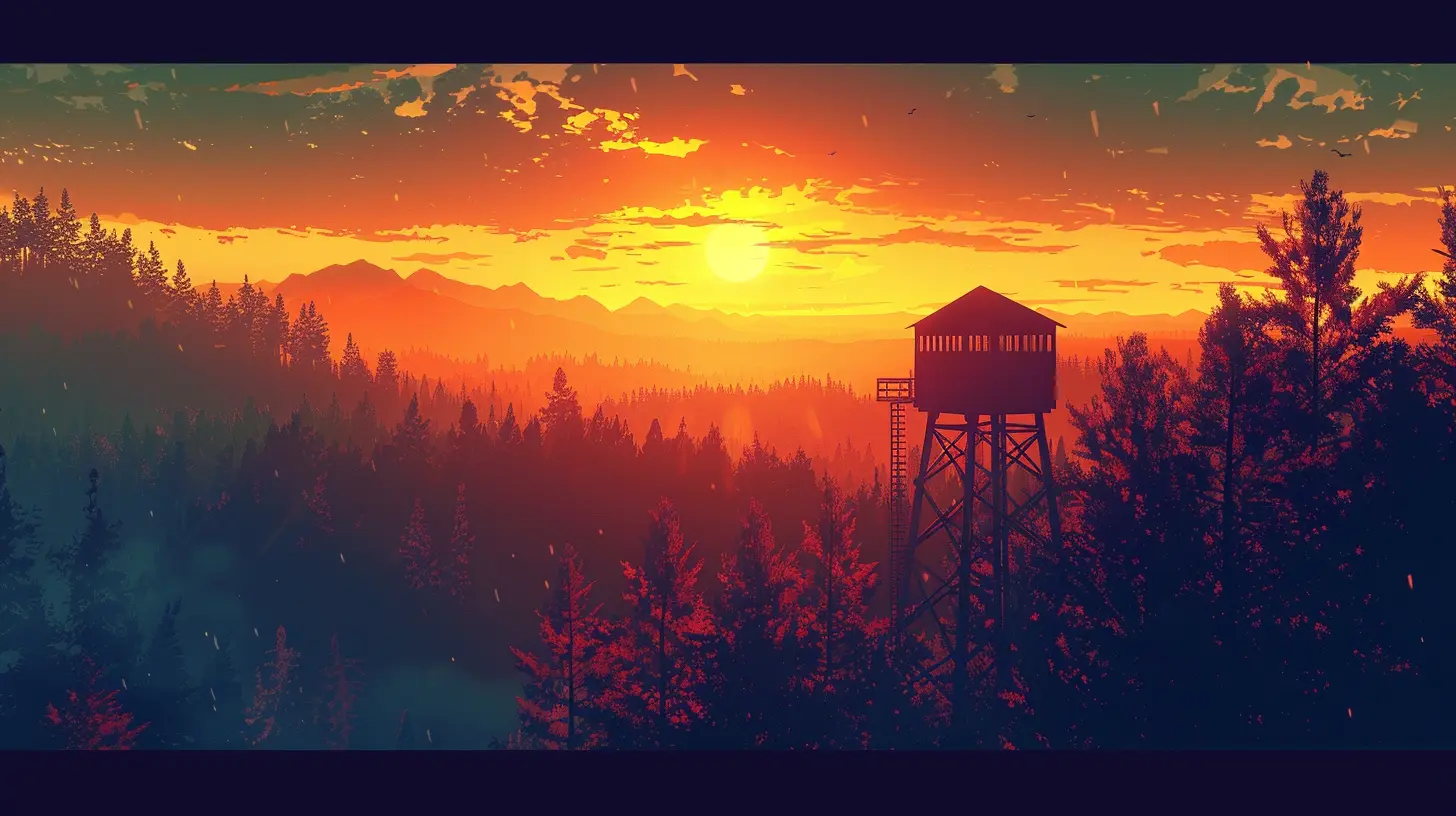
No Neat Bows, No Fairytale Endings
Let’s face it: we crave closure. We want Delilah to be waiting for us at the helicopter. We want Henry to make a bold decision — to go back home, to see Delilah, to take control.But nothing like that happens.
Delilah isn’t at the evacuation point. Henry is left standing there, alone. The fire rages. The choices lie ahead, but we don’t get to see them play out. This is where so many players feel the sting — they expected something, anything, that ties it all up.
Instead, they get reality.
Because real life? It doesn’t always offer satisfying conclusions. Sometimes the people we meet stay in our lives forever. Sometimes they’re just a voice on the radio. Sometimes healing is just a process, not an event. And Firewatch knows that.
The Ending Reflects the Beginning
The game’s intro smacks you right in the feelings. Through a minimalist, text-based sequence, Firewatch lays out Henry’s past: how he met Julia, how she got sick, how he slowly let go of the life they shared.It’s intimate. It’s deeply human. And it frames everything that follows.
By the end, when you hear Delilah’s voice for the final time, it mirrors that same sense of helplessness from the beginning. You can’t fix this. You can’t make it neat. You can only move forward — one uncertain step at a time.
In that way, the ending isn’t just Firewatch’s conclusion. It’s Henry’s chance at beginning again.
Delilah: The Voice That Never Fully Materializes
Let’s talk about Delilah for a second. Her voice fills the airwaves for the entire game. She jokes, she reassures, she flirts, she listens. But you never see her. Not once.That’s powerful.
Keeping Delilah physically distant strengthens the emotional connection — it makes her feel real while also emphasizing the isolation of their relationship. She’s a voice in your life, not a presence. When she leaves abruptly at the end, it feels real in a way that most video games — and heck, even most books or movies — rarely manage to capture.
It hurts because it’s authentic. We've all had emotional connections fizzle out, fade away, or get cut off. Delilah being gone before you arrive doesn't feel like a plot hole — it feels like life.
The Forest Becomes a Character
By the final stretch, the Wyoming wilderness stops being just a backdrop. It becomes a symbol — of escape, of confusion, of beauty and danger. It reflects Henry's inner state: vast, uncertain, sometimes burning.The fire that looms toward the end of the game perfectly mirrors the emotional wildfire in Henry’s life. It forces evacuation, forces decisions, forces him to face the world again.
You arrive at the very exit of your summer story, and the fire is still blazing. Nothing's resolved, and yet everything feels said.
That symbolism? That's storytelling gold.
A Game That Leaves Room for You
One of Firewatch’s most underappreciated strengths is how much it trusts the player. It doesn’t hold your hand. It doesn’t tell you what to feel. It leaves space for your emotions to breathe.There’s no final score. No achievement for “Emotionally Recovered.” When the credits roll, it’s just… over.
And in that silence, players bring their own experiences, regrets, longings, and hopes into the space the game leaves behind. Everyone interprets the ending differently, and that’s the magic. Like a good poem, Firewatch doesn’t explain itself. It invites reflection.
Choices Without Resolution… on Purpose
Let’s talk about the game’s branching dialogue. Throughout Firewatch, you choose how Henry responds to Delilah. Your choices shape their relationship: friendly? Flirty? Guarded?But at the end? Those choices don’t lead to a “best” ending. There’s no romance scene. No confession. No big choice that changes the outcome. And at first, that might seem like a letdown.
But look closer — it’s a brilliant subversion. In life, relationships aren’t binary. They’re messy, complicated, full of unresolved tension and missed chances. Firewatch respects that truth. It doesn’t reward or punish you. It just lets you be.
The Absence of Music Speaks Volumes
Let’s not overlook the sound design. The use of silence in Firewatch is no accident. When music does kick in — like the haunting, sparse acoustic tracks — it hits hard.And in that final helicopter scene? The silence is deafening.
It mirrors the emotional vacuum Henry feels. The absence becomes its own kind of presence. You feel the weight of what’s been lost, and the ache of what might still be found. It’s the kind of moment that lives in your chest long after.
Henry’s Growth Is Quiet… But Real
Many players ask, “What was the point?” because Henry doesn’t undergo some movie-like transformation. He doesn’t suddenly become heroic or wise. But he does change.The man who arrived in the forest was running. The man who leaves isn’t sprinting toward anything, but he’s not hiding anymore. He faced the truth about Brian. He let go of the fantasy with Delilah. And maybe — just maybe — he’s ready to face his life again.
That kind of growth? It’s subtle. But it’s more honest than a million cinematic epiphanies.
It Dares to Be Melancholy
In a medium dominated by power fantasies, Firewatch stands out simply by being sad.Not tragically sad, not melodramatic — just… melancholic. Bittersweet. Like a summer you’ll always remember but never quite understand.
It taps into that universal feeling of looking back on a time that both healed and hurt you. The campfire memories that warm and sting you all at once. That’s something rare. That’s something that stays.
So… Why Does It Still Matter?
Because Firewatch doesn’t just tell a story. It whispers it.It trusts you to listen. To fill in the blanks. To bring your own baggage and sort through it in the woods alongside Henry.
The ending doesn’t slam shut. It lingers like smoke in the trees. It makes you feel — not because of spectacle, but because it reminds you of your own late-night conversations, crossed wires, missed chances, and all the things you wanted to say but didn’t.
In that way, Firewatch isn’t about Henry or Delilah or even Brian. It’s about us.
And that’s why its ending will always resonate.
Final Thoughts
If you’ve played Firewatch, you probably walked away with more questions than answers. And that’s okay. That’s kind of the point.In a world where games are often obsessed with giving players what they want, Firewatch gives us what we need — a quiet reminder that not everything wraps up neatly, and that some things are meant to be felt rather than solved.
So if you're still thinking about that ending weeks, months, or even years later — you're not alone. You're just human. And Firewatch knows that better than most games ever will.
all images in this post were generated using AI tools
Category:
Game Endings ExplainedAuthor:

Pascal Jennings
Discussion
rate this article
2 comments
Zayne McTiernan
The ending of Firewatch sticks with players because it captures the complexity of human relationships and the weight of unresolved emotions. It leaves us pondering our choices and connections, echoing real-life experiences. This lingering sense of reflection makes the game's conclusion memorable and impactful.
June 27, 2026 at 3:19 AM
Pascal Jennings
I completely agree. The ending's emotional depth really highlights the importance of choices and connections, leaving a lasting impression that resonates deeply with our own experiences.
Harrison Warren
Firewatch's ending lingers because it captures the complexity of human connection and the weight of choices. The emotional depth, coupled with the stunning environment, leaves players reflecting on personal relationships and the impact of decisions long after the game ends.
May 21, 2026 at 3:51 AM
Pascal Jennings
I completely agree. The ending really does encapsulate the intricate nature of relationships and the consequences of our choices, making it a powerful experience that stays with you. The environment amplifies those themes beautifully.