The Endless Replayability Factor in Sandbox Games: What Keeps Us Coming Back?
2 January 2026
Ever booted up a sandbox game for “just an hour” only to find yourself still building castles, crafting gear, or forging your own weird little empire four hours later? Yeah, same. There’s something undeniably magnetic about sandbox games. We just can’t help but come back to them—over and over again. But why is that?
Let’s dig deep into what gives sandbox games their irresistible, seemingly infinite replay value. Spoiler alert: it’s a mix of freedom, creativity, and a pinch of digital chaos.
What Exactly Is a Sandbox Game?
Before we go full-on analysis mode, let’s set the stage.A sandbox game is like a digital playground. It gives players open-ended freedom to explore, build, destroy, or just exist without nagging constraints. You’re not locked into a linear story or forced to follow a strict path. Whether it’s surviving in the blocky biomes of Minecraft, wreaking havoc in GTA V, or colonizing planets in No Man’s Sky, the experience is yours to shape.
It's not about reaching the end—because often, there isn’t one.
The Freedom Fantasy: Why Choice Matters
Remember as a kid when you could turn a cardboard box into a spaceship, a fortress, or a secret clubhouse? Sandbox games give us that same blank-page freedom. And that’s a big deal.In most traditional games, you follow a script. In sandbox games, you write your own story.
- Wanna build a medieval kingdom? Go for it.
- Prefer to live as a peaceful farmer? No one’s stopping you.
- Feel like causing chaos just to see what happens? You’re in the right place.
That freedom? That’s pure replayability gold. Because no two sessions are the same—your choices shape your experience every single time.
Creativity as Gameplay: When You Become the Designer
Let’s be real: humans love to create. Whether it’s painting, storytelling, or yes—even virtual architecture.Sandbox games put the creative tools in your hands. Think about it:
- Minecraft gives you literal building blocks to design anything from a cozy cottage to a 1:1 replica of the Eiffel Tower.
- The Sims lets you craft entire lives, relationships, and drama faster than a reality TV show.
- Terraria starts with nothing but becomes a pixel-art masterpiece with just a bit of patience.
When the game isn’t giving you goals, you make your own. That’s where the magic happens. You come back not because there’s more to unlock—but because there’s more you want to do.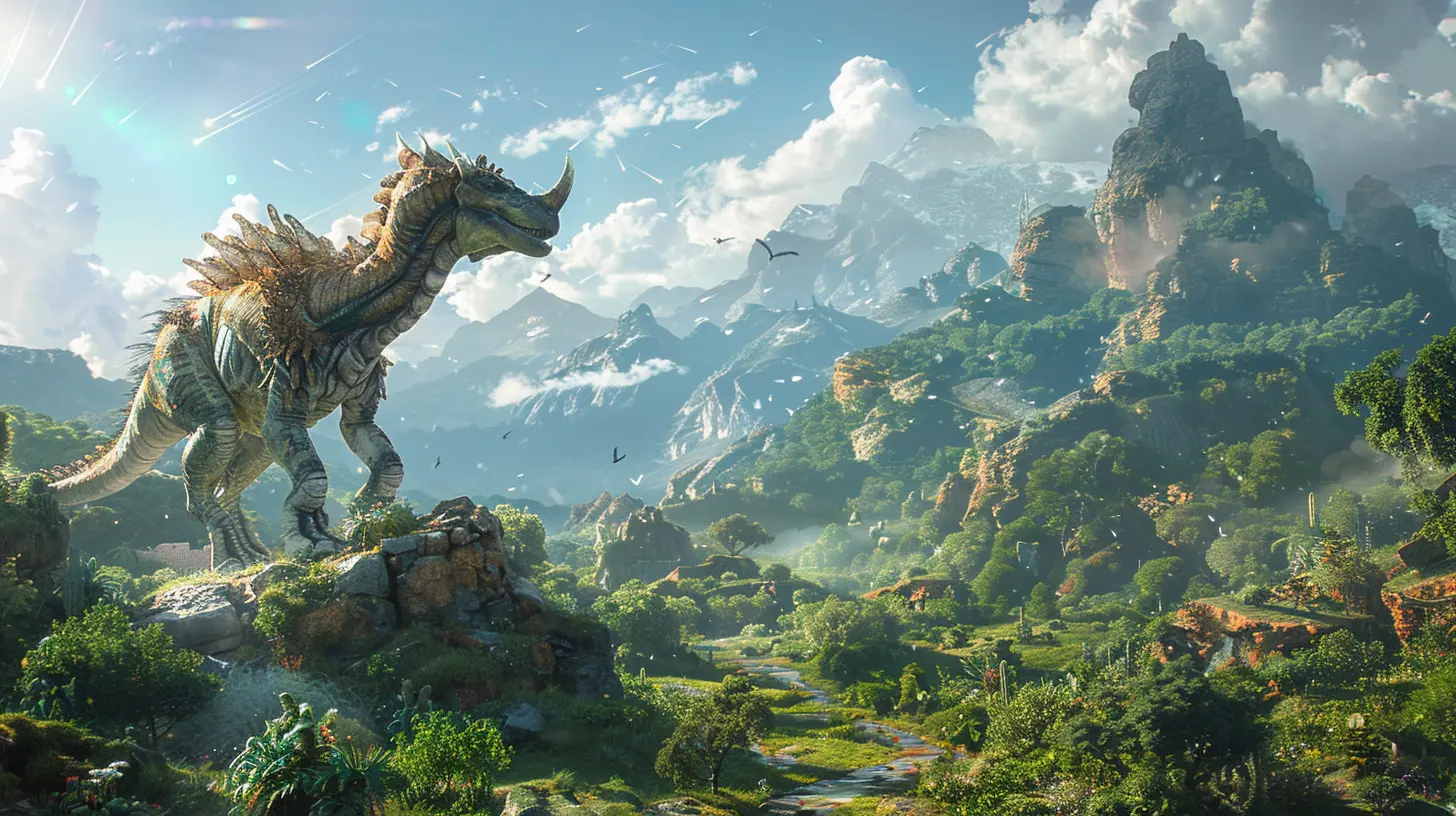
Emergent Gameplay: The Unexpected Is Inevitable
One of the coolest things about sandbox games is emergent gameplay. What does that mean? It’s when simple mechanics interact in surprising ways—often ways that even the developers didn’t plan.Think about:
- That time a creeper in Minecraft blew a hole right into your hidden underground base.
- Or when police chases in GTA turned into full-blown action movie sequences.
- Or how a random NPC in Skyrim witnessed your crime and triggered a town-wide manhunt.
These unscripted, unpredictable moments feel personal. They feel like your story. And because you never know what’ll happen next, you’re always tempted to hop back in “just one more time.”
Community and Mods: Keeping the Game Alive (Forever)
If the base game is the cake, then the community and modding scene? That’s the icing, sprinkles, and maybe a scoop of ice cream on top.Take Skyrim, for example. Released back in 2011—and still going strong today. Why? Mods.
- Want better graphics? There’s a mod for that.
- Want dragons replaced with Thomas the Tank Engine? Weird flex, but also yes.
- Whole new questlines? Entire new worlds? You bet.
Modding communities breathe new life into sandbox games, stretching their lifespan way beyond what most games get. You’re not just replaying the same experience—you’re diving into new experiences built by passionate fans.
And don’t forget servers and multiplayer. Jumping into a player-created world or custom game mode, like Minecraft Hunger Games or RP servers in GTA, transforms the sandbox from a solo sandbox to a social sandbox.
The Psychological Pull: Why Our Brains Love Open Worlds
Let’s get a little nerdy for a sec.The reason sandbox games keep us hooked isn’t just about gameplay—it’s tied to how our brains work.
1. Dopamine from Discovery
Exploring a new cave, finding rare loot, stumbling upon a hidden village—these hit the same reward centers in our brains as winning a scratch-off ticket. Each discovery gives us a little hit of dopamine, and it’s addictive in the best way.2. Control and Autonomy
Sandbox games give us control in a world where, let’s face it, we often don’t have much. You’re the boss. You decide what to do, when to do it, and how it plays out. That feeling of control? It’s empowering, and it keeps you engaged.3. Progress and Mastery
Even without a storyline pushing you forward, sandbox games often have systems of progress—skills to level up, tools to unlock, areas to explore. That sense of ongoing mastery keeps your interest alive.Evolution Over Time: Games That Grow With You
Another reason we circle back to sandbox games? They evolve.Developers keep updating them, adding new content, balancing features, and sometimes even overhauling entire mechanics. Think about:
- Minecraft’s endless updates with bees, caves, axolotls, and more.
- No Man’s Sky going from disappointment to redemption with years of free expansions.
- Stardew Valley getting love and care years after release.
Your game world isn’t static. It grows—and so does your desire to return and see what’s new.
The “One More Thing” Loop
Here’s a scenario: You’re playing Terraria. You just want to mine some ore. Then you find a cool cave. Then you spot a chest. Then you need to build a better pickaxe. You head back... but then it’s nighttime, and now you’re fighting zombies. Before you know it, two hours have flown by.That’s called the “one more thing” loop. It’s when small tasks chain together in a way that keeps you moving forward without realizing how long you’ve been playing.
It’s not a bug—it’s a feature. And sandbox games are masters of it.
Different Playstyles, Different Playthroughs
Not every sandbox game session has to feel the same.Today you might be in it for the chill vibes, building a cozy lakeside retreat. Tomorrow you might want action—slaying monsters or racing police cars.
You can roleplay different characters, try strange self-imposed challenges, or even play with new friends. The flexibility of the sandbox means that you can approach the same world from a dozen different angles, each time discovering something fresh.
Closing Thoughts: The Replayability That Never Ends
The beauty of sandbox games lies not in their endings—but in their beginnings. Each time you hit ‘New Game’ or load into your world, the possibilities are endless.You come back not because you have to. You come back because you want to. Because the game offers you not just entertainment—but ownership, creativity, freedom, and a sense of wonder that’s hard to find elsewhere.
So next time you find yourself deep into a 10-hour building binge or a spontaneous joyride across a digital city, remember: you’re not just re-playing. You’re reinventing.
all images in this post were generated using AI tools
Category:
Sandbox GamesAuthor:

Pascal Jennings
Discussion
rate this article
2 comments
Emmeline Tucker
Sandbox games are like potato chips—once you start, it’s hard to stop. Every session unveils new adventures and possibilities!
January 17, 2026 at 3:53 PM
Pascal Jennings
Absolutely! Sandbox games offer limitless creativity and exploration, making each session feel fresh and exciting. It's easy to lose track of time when there are always new adventures waiting!
Delilah McKittrick
Sandbox games thrive on player agency and emergent storytelling, creating unique experiences that encourage exploration and experimentation, ultimately fostering endless replayability.
January 10, 2026 at 4:20 AM
Pascal Jennings
Absolutely! Sandbox games excel in offering players the freedom to create their own stories and experiences, which keeps the gameplay fresh and engaging, ensuring we always find new adventures to explore.