Breaking Down the True Ending of NieR: Automata
9 May 2026
NieR: Automata isn’t just a game—it’s an emotional rollercoaster wrapped in philosophy, drenched in existential dread, and spiced with some of the most mind-bending storytelling in gaming. If you’ve played it (and I really hope you have), you already know how deep it runs. But if you’re here, it means you’ve either finished Ending E and have a million questions... or you’re just curious about what the heck it all means.
So buckle up, because we’re diving deep into the true ending of NieR: Automata—what it means, why it matters, and how it brings a beautiful, bittersweet closure (or does it?) to an unforgettable journey.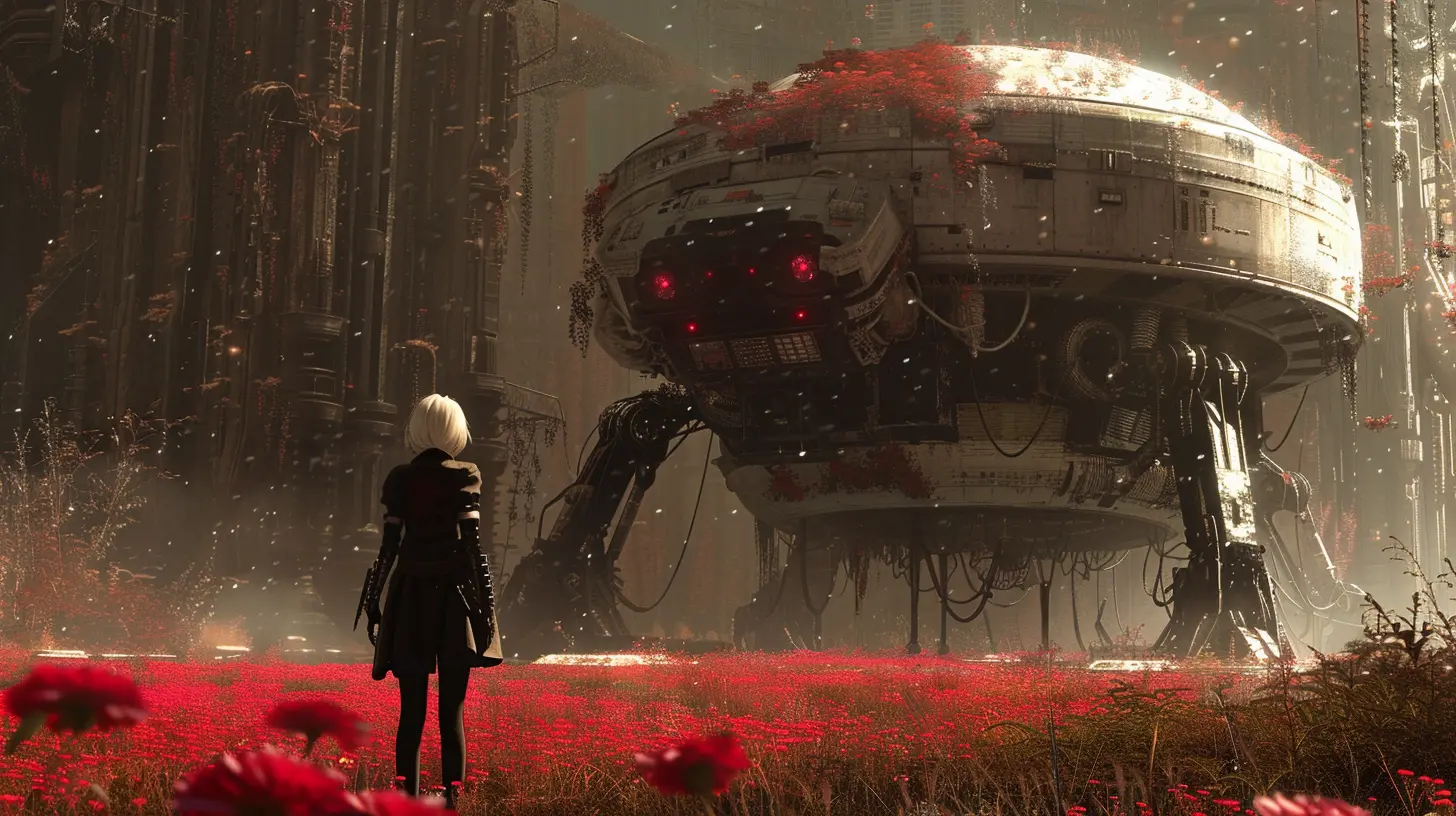
What Makes NieR: Automata's Story so Unique?
Before we even touch the true ending, Ending E, let’s talk about what sets NieR: Automata apart. This isn’t your typical action RPG. Sure, it’s got flashy combat, killer robots, and slick anime androids. But it also has layers. Think of it like peeling an onion—every layer hurts a little more, but you just can’t stop.NieR: Automata plays with perspective, storytelling, and player choice in a way that few games dare. You don’t just play the game—you become part of its narrative. The story unfolds across multiple playthroughs, each revealing new sides of the same events. And the more you learn, the more heartbreaking it gets.
By the time you’ve earned the true ending, you haven’t just finished a game. You’ve been put through an emotional boot camp with themes like identity, self-worth, sacrifice, and the meaning of existence.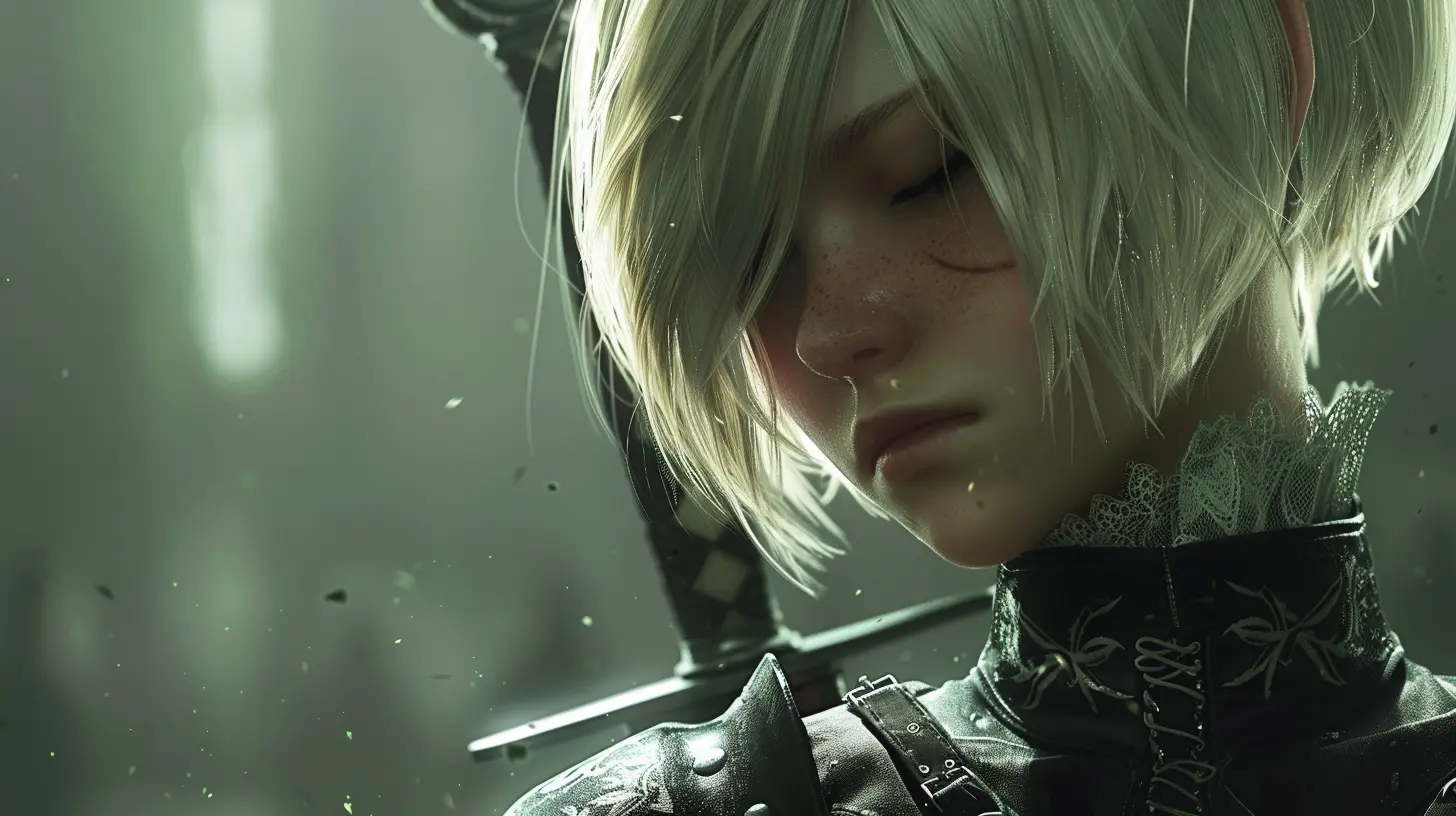
Understanding the Structure: The Five Main Endings
Alright, quick recap for context. NieR: Automata has 26 endings labeled A through Z. But only five of them are considered “main” endings: A, B, C, D, and E. The rest? Think of them as Easter eggs or “oops, you died/fell off the path” endings.Here’s a breakdown:
- Ending A – “Flowers for Machines”: Your first playthrough as 2B. You finish the game, but it’s far from over.
- Ending B – “Or Not To Be”: Second playthrough from 9S’s perspective. Explains a LOT of what you missed the first time.
- Ending C – “Meaningless Code”: Third playthrough, choices matter here. It ends with either A2 or 9S surviving.
- Ending D – “Childhood’s End”: The alternate to Ending C—depending on who you pick in the final fight.
- Ending E – “the [E]nd of YoRHa”: The true ending. This is where things go full meta, full heartbreak, and full hope.
Now that we’ve set the stage, let’s zoom in on that last one.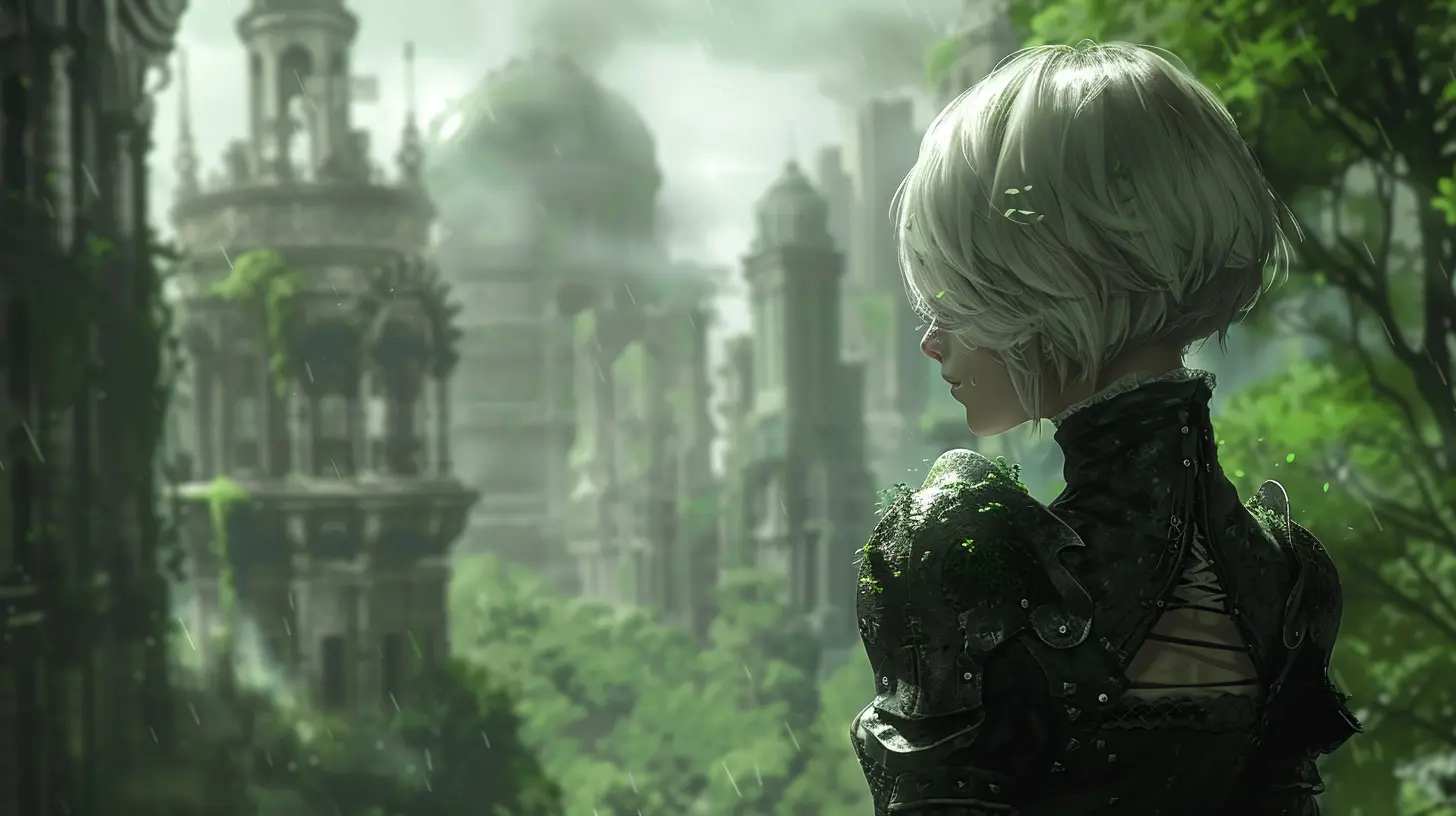
What Exactly Happens in Ending E?
After you achieve either Ending C or D, something wild happens. You’re prompted with a request: do you wish to “continue the struggle”? It’s not just a question for the characters—it’s a question for you. If you say yes, things get really interesting.The game suddenly turns into a bullet-hell shoot 'em up (again, for like the 20th time), but this time you’re battling the credits themselves. Literally. The game’s credits attack you, and you try to shoot your way through it.
Spoiler alert: It’s impossible. You will lose. Repeatedly.
But then, something beautiful happens. The game offers you help. Other players—anonymous strangers, other real-life humans—lend you their support. Their data, their lives, their victories. You beat the impossible together.
And when you survive, you’re given one final choice. You can sacrifice your save data—every weapon, every achievement, every hour sunk—so that you, too, can help someone else down the line.
That’s Ending E. A circle of compassion, hope, and human (or android) kindness.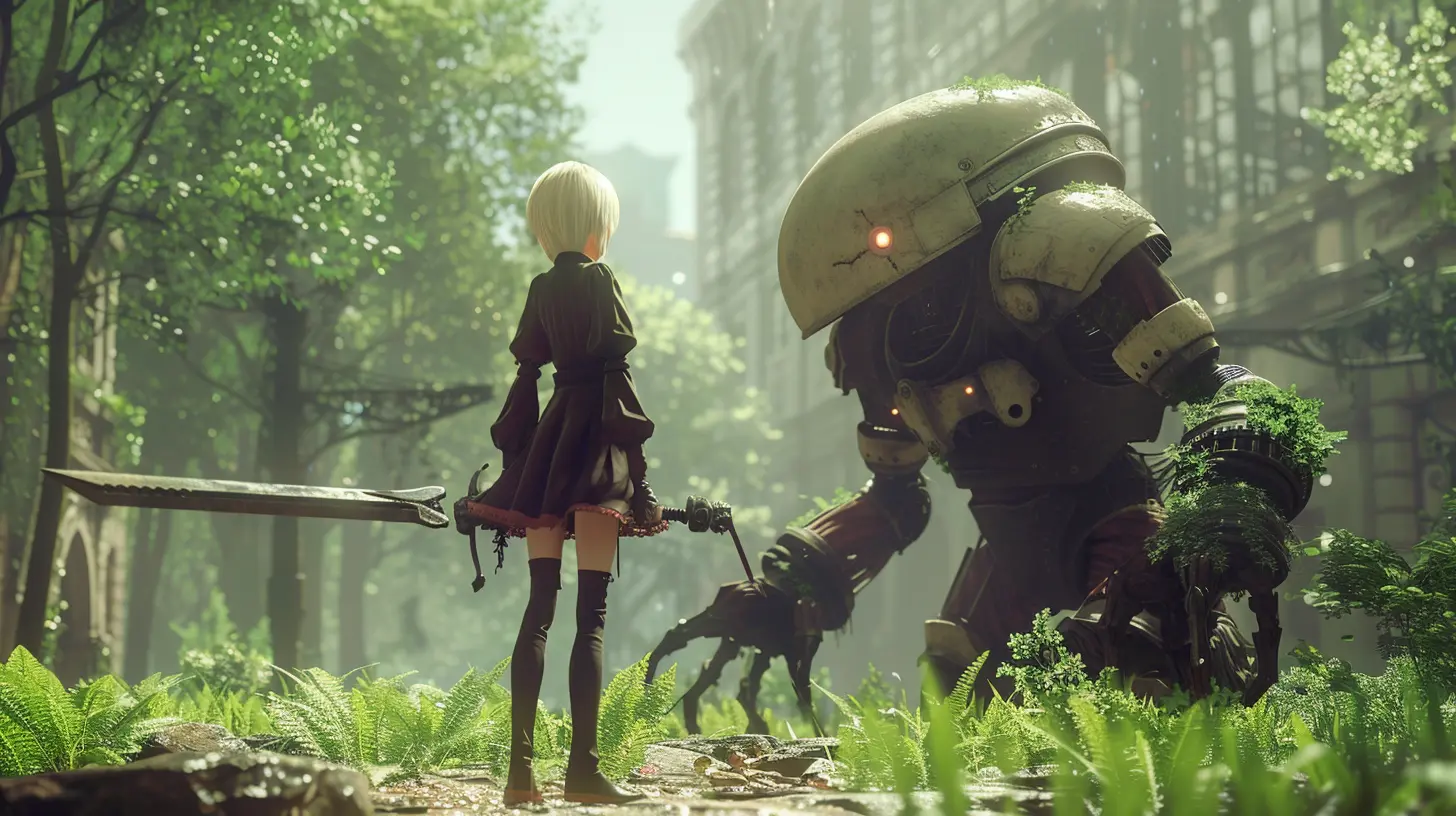
The Big Themes Behind Ending E
1. Hope in the Face of Despair
The entire game is drenched in sadness. Machines trying to imitate love. Androids questioning their purpose. Death. Rebirth. More death. It’s nihilism at its finest.But Ending E flips the script.
Just when things seem most hopeless—when the story should end in darkness—the game offers an option to believe. That maybe, just maybe, things can be different. That history doesn’t have to repeat. That we can choose compassion over chaos.
Choosing to help another player, even knowing you’ll lose all your progress, is the ultimate expression of hope.
2. The Power of Player Agency
Ending E is one of the rare times when a game breaks the fourth wall in a way that feels earned. It’s not just a gimmick. It’s a test of character.By letting players actively choose whether or not to help others, NieR: Automata turns a single-player game into a shared experience. It’s a reminder that, even when we're alone, we’re not really alone.
3. Forgiveness and Moving On
Throughout the story, the androids and machines are caught in endless cycles of violence and tragedy. But the ending suggests they can move past that. That they’re not bound by their programming or their past.That’s powerful, not just in the context of the game—but in life.
What's the Meaning Behind the Sacrifice?
Let’s talk about that final sacrifice—a hard reset of your entire playtime so someone else can get help.It’s insane, right? Giving up everything you worked for? In any other game, that would be unthinkable.
But in NieR: Automata, it’s kind of... perfect.
It parallels the game’s message—that we find meaning in the connections we make and the sacrifices we’re willing to undertake for others. It’s symbolic. You’re not just helping another player—you’re becoming part of a collective kindness.
Think of it like paying it forward in the most literal sense. You didn’t survive the impossible alone, so why should the next player?
Do 2B, 9S, and A2 Really Survive?
One of the biggest questions after Ending E is simple: Are they alive? Or is it just wishful thinking?The pods (Pod 042 and Pod 153) discuss reconstructing them. A2, 2B, and 9S can potentially be revived, given their data is still intact. But here's the catch—it’s left open-ended. We don’t see them awakening. We don’t get a “and they all lived happily ever after.”
Why? Because life doesn’t work that way. Especially not in this universe.
But that’s also what makes it hopeful. The story doesn’t end with tragedy. It ends with the possibility of something new. Something better.
It’s not a promise—it’s a chance.
Hidden Meanings and Meta Layers
Yoko Taro (the creator of NieR) is notorious for layering meaning under meaning. And Ending E is peak “Yoko Taro brain.”The final sequence is as much a commentary on gaming as it is a narrative conclusion.
He’s asking: What do we do with our pain? Do we protect it? Preserve our “save data” and keep it locked away? Or do we give it up for the sake of helping someone else—knowing we won't even be thanked, remembered, or acknowledged?
It’s poetic. It’s meta. And yeah, it hits hard.
The End… or a New Beginning?
So, what’s really going on?Is Ending E the end of NieR: Automata? Technically, yes. Narratively, that’s the final beat. But emotionally and philosophically? It’s a new start.
The story comes full circle, only to suggest a loop can be broken. That not every cycle must repeat. That maybe, just maybe, androids can forge a new path without war, revenge, or despair.
It’s not a clean finish. But it’s honest.
Final Thoughts: Why Ending E Stays With You
In a way, NieR: Automata asks more from the player than most games ever will. It demands emotional investment, moral consideration, and—even at the end—personal sacrifice.Ending E isn’t just a conclusion. It’s a choice to believe in something bigger than yourself. It’s about community. Empathy. And the incredible power of choosing to care—even in a crumbling world.
And honestly? That hits harder than any boss fight ever could.
Frequently Asked Questions
Q: Can you get Ending E without getting C and D?
Nope. You need to finish both Ending C and D routes. Once you do, the route to Ending E will unlock.Q: Do you really lose your save data?
Yes, if you choose to help others. It’s optional, and the game warns you clearly. But once you commit, it’s gone—forever. No take-backs.Q: Is there any reward for giving up your save?
Not in the traditional sense. No items, no trophies. But the emotional payoff? Totally worth it.all images in this post were generated using AI tools
Category:
Game Endings ExplainedAuthor:

Pascal Jennings
Discussion
rate this article
2 comments
Duke Hamilton
NieR: Automata's true ending masterfully intertwines existential themes with emotional depth. It challenges players to reflect on choices and consequences, highlighting the thin line between humanity and machines in an engaging, thought-provoking narrative journey.
June 15, 2026 at 3:36 AM
Pascal Jennings
Absolutely, the true ending adds layers to the narrative, forcing players to grapple with their decisions. It's a profound exploration of what it means to be human, even in a world filled with machines.
Skylar Price
NieR: Automata's true ending is a masterclass in storytelling. It challenges players to reflect on sacrifice, identity, and the value of existence. The emotional weight lingers long after the credits roll, making you question what it means to be human in a world defined by conflict.
May 11, 2026 at 2:52 PM
Pascal Jennings
I completely agree. The true ending of NieR: Automata really drives home those themes. It stays with you long after the game is over, making you ponder life and purpose in such a compelling way.